LÄVI interior architects (lavi.ee) is a fast-growing Estonian interior architecture and design company. Behind their creative success, they were struggling with growing operational complexity: too many tools, fragmented data, and limited visibility into projects and resources.
This case study explains how LÄVI, in collaboration with Lean Digital, used business process optimisation, digitalisation, and project management software to reduce tool chaos, improve resource planning, and build scalable operations without losing their creative edge.
Case Study at a Glance
- Client: LÄVI sisearhitektid
- Industry: Interior architecture & design
- Location: Estonia
- Focus: Business process digitalisation, project and resource management
- Key themes: Tool consolidation, data visibility, resource planning, digital culture change
- Outcome: One integrated platform, clearer processes, better planning, stronger team ownership
Client Background
LÄVI sisearhitektid specialises in interior architecture and design for modern workplaces, serving clients like Wise, Bolt and SEB. As the company grew, the founding team expanded into a 15-person studio.
With growth came complexity. What started as a small, tightly coordinated team became a larger organisation where:
- processes lived in people’s heads,
- teams tracked their work across multiple tools and spreadsheets,
- and management lacked a real-time view into projects and capacity.
LÄVI partnered with Lean Digital to bring structure and clarity to their business processes, while preserving the creative culture that made the company successful.
Challenges:
When Creative Growth Meets Operational Complexity
1. Data Fragmentation and Tool Overload
LÄVI’s everyday work was spread across many different systems.
- Business-critical data was scattered between 30 different software applications.
- Only 6 of those tools were truly essential for daily operations.
- Information moved manually between systems and was often duplicated.
- The data needed for decision-making was inconsistent, unreliable, and not machine-readable.
As a result, leadership did not have a single, trustworthy view of project performance or business health.
2. Resource Planning Challenges
Resource planning relied heavily on manual work and Excel.
- There was no clear visibility into how planned time compared to actual time spent.
- Workload tracking was slow, manual, and error-prone.
- The team could see logged hours, but not how projects were progressing.
- Resource bottlenecks were hard to detect in time, which made it difficult to balance workloads and plan new projects confidently.
This made business scaling risky: taking on new work always felt uncertain.
3. Project Management Pain Points
Project management was split across multiple non-integrated tools.
- Tools like Asana, Clockify, and Scoro were used in parallel without integration.
- Asana did not reflect real project status or completion level reliably.
- Consolidated project overviews existed but were underused by team leads.
- Project communication was scattered across emails, tools and spreadsheets, making context hard to follow.
- Time tracking in Clockify and tasks in Asana were not connected, leading to duplicated work and missing links between effort and outcomes.
In short, LÄVI had a lot of digital tools—but not a coherent project management system.
Solution:
From Fragmented Tools to a Unified Digital Process
Faced with this complexity, the LÄVI team decided to rethink their way of working. With Lean Digital’s guidance, they designed and implemented a new, integrated operating model.
Together, they:
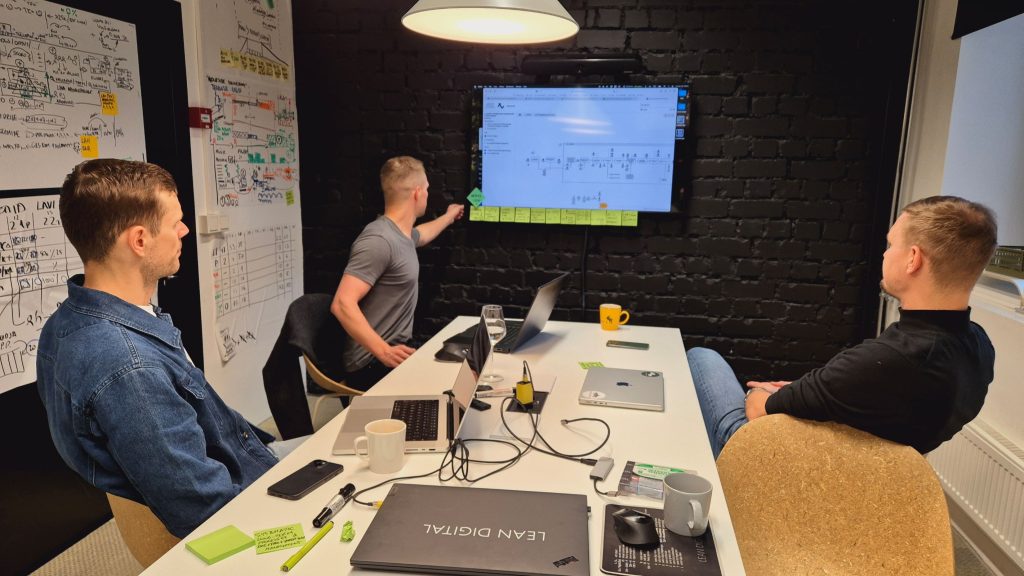
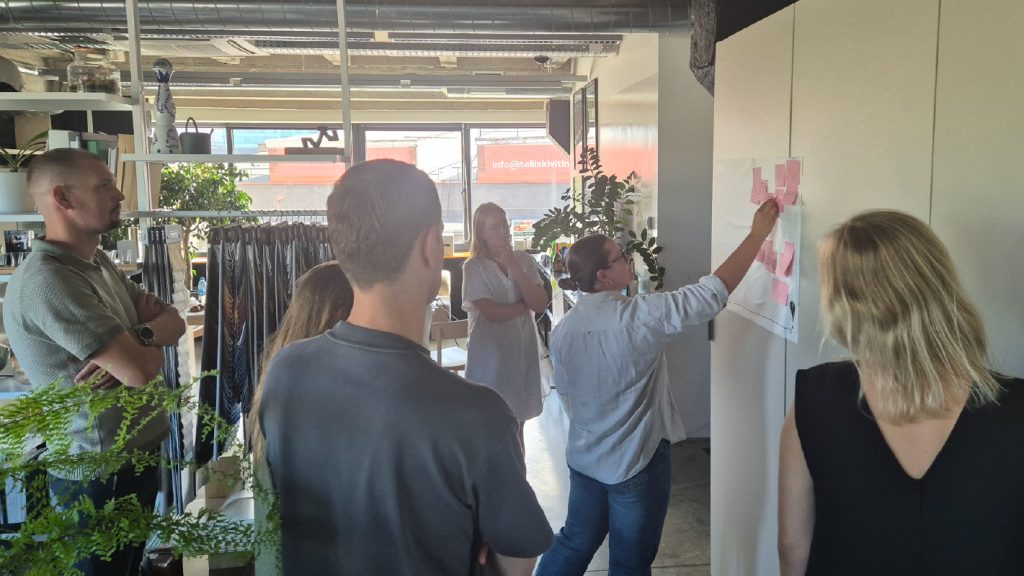
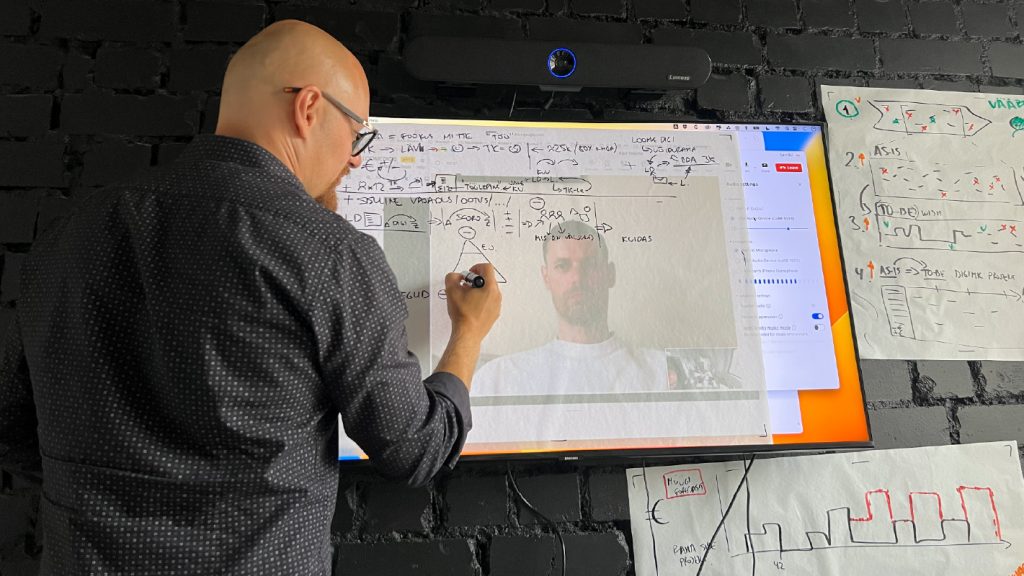
- Mapped and optimised their core project and business processes in detail
- Clarified their end-to-end project workflow from initial client brief through design to project handover
- Identified bottlenecks, handover points, and duplicated work
- Consolidated multiple tools into a single integrated platform (Scoro)
- Moved project, time, and resource management to one unified system
- Reduced tool switching and eliminated redundant software
- Standardised project and resource management
- Defined clear workflows, roles, and responsibilities
- Created standard templates and structures for recurring project types
- Introduced weekly planning cycles and visual dashboards
- Weekly planning sessions for task allocation and prioritisation
- Visual dashboards to monitor workload, deadlines, and project status in real time
- Enabled real-time task tracking and resource forecasting
- Linked tasks, time entries, and projects in a single environment
- Improved visibility into capacity and future workload
- Supported a shift toward structured digital collaboration
- Helped the team adapt to new routines and tools
- Built a culture where logging work, updating tasks, and using shared dashboards became the norm
Key Outcomes
1. Integrated Project Management Platform
LÄVI moved from a complex mix of tools to a single platform for project and resource management.
- Project information, tasks, and time tracking are now in one place.
- Managers and team members share the same, real-time view of ongoing work.
2. Real-Time Resource Planning
Resource planning became more accurate and less stressful.
- Scheduling and task allocation are now based on real data, not gut feeling.
- The team can see who is working on what, when, and for how long.
- Potential overloads and free capacity are easier to spot early.
3. Operational Transparency
Work became more transparent at all levels.
- Weekly task planning and visual dashboards provide a clear structure.
- Status tracking helps everyone understand where each project stands.
- Clearer ownership and fewer communication gaps reduced friction in daily work.
4. Scalability Through Standardised Processes
Standardised processes made it easier for LÄVI to scale.
- New team members can be onboarded more quickly.
- Projects follow a predictable structure, making planning and follow-up more efficient.
- Leadership can make better decisions based on consistent data.
5. Digital Culture Shift
The transformation was not only technical - it was cultural.
- Teams adapted to structured systems and shared routines.
- Responsibility for updating tasks, logging time, and keeping data accurate is more widely shared.
Digital tools are now used as a support for creative work, not a source of chaos.
With Lean Digital, we found a way to scale our vision without losing what made us unique.”
What This Means for Other Creative Companies
LÄVI’s experience shows that:
- A creative business can stay flexible and innovative, even with more structure.
- Reducing tool overload and improving data visibility are key to scalable growth.
- A well-designed business process and project management system can free teams to focus on what they do best: delivering great work.
If your company is juggling too many tools, spreadsheets, and ad-hoc processes, you don’t have to choose between creativity and structure - you can have both.
Take the Next Step
Thinking about improving your own business processes, project management, or resource planning?
Contact LEAN DIGITAL to explore how we can help you:
- map and optimise your core processes,
- consolidate tools into a coherent system,
- and build a digital way of working that supports both growth and creativity.