Uretek Baltic is an international geotechnical engineering company that repairs cracked walls, sunken floors, and unstable concrete structures using geopolymer injection, with a small multinational team operating across Estonia, Latvia, and Lithuania. Behind their technical expertise, the company had struggled for years to make its business processes and tools work consistently across all three countries.
This case study explains how Uretek Baltic, in collaboration with Lean Digital, used business process mapping, business process management (BPM), and process optimisation as part of a phased digital transformation to replace error-prone spreadsheets and inconsistent habits with standardised, mapped processes - using the Scoro software it already had to its full potential as one unified system, align processes across three countries, and build reliable forecasting.
Case Study at a Glance
- Client: Uretek Baltic
- Industry: Geotechnical engineering
- Location: Estonia, Latvia, Lithuania
- Focus: Business process standardisation, multi-country digital transformation
- Key themes: Process mapping, unified systems, phased rollout, forecasting
- Outcome: One unified system across three countries, standardised processes, reliable revenue and workload forecasting
About Uretek Baltic: A Multi-Country Geotechnical Engineering Company
Uretek Baltic ran its entire multi-country operation - CRM, invoicing, and accounting - on Excel spreadsheets, then adopted a business platform (Scoro) in 2017. Rather than adapting their own habits to the new platform, the team adapted the platform to their old habits - customising and modifying it until they'd effectively built their own unique version of it, a costly effort that didn't solve the underlying problem. After two years, they tried an alternative tool for about a year before returning to Scoro. At that point, Uretek Baltic brought in Lean Digital.
Uretek Baltic specialises in geotechnical repair - geopolymer injection for cracked walls, sunken floors, and unstable concrete structures - for clients across the Baltic states. As a small, multinational team operating in three countries, the business grew with each market developing its own way of working.
With that growth came complexity:
- core business data was split between spreadsheets and Scoro, the business platform Uretek Baltic had adopted - used inconsistently and without its full capabilities,
- sales and project processes evolved independently in each country,
- and process ownership was never clearly defined.
Uretek Baltic partnered with Lean Digital to optimise its core business processes and review how its digital tools were actually being used - work that also ended up aligning the business across all three markets.
Challenges:
Running a Three-Country Business on Spreadsheets and an Underused Platform
1. Fragile, Spreadsheet-Based Operations Alongside an Underused Platform
Uretek Baltic's core business ran on a mix of spreadsheets and Scoro, the business platform it had adopted - without using its full capabilities
- Spreadsheets still held critical data, with over a thousand rows and no structural safeguards - a single misplaced edit could disrupt the whole system.
- Scoro was in use, but customised and applied inconsistently, so its capabilities weren't being used to their full potential.
- Data was not standardised across either system, making it hard to trust or act on with confidence.
2. Unclear Process Ownership
Day-to-day decisions had no defined owner.
- Simple internal tasks could involve the entire team with no clear resolution.
- There was no consistent way to confirm whether a contract was signed or where it stood.
- Responsibility for closing the loop on a task was assumed, not assigned.
3. Inconsistent Processes Across Countries
Operating in three countries meant three different ways of working.
- Sales processes had evolved independently in each country, shaped by local habits rather than a shared standard.
- Inconsistent processes meant inconsistent conversion across markets.
- There was no shared language for how work was actually done.
4. A Software Change That Didn't Fix the Underlying Process
In 2017, Uretek Baltic adopted new business software - a genuine capability leap at the time.
- The team customised the tool to fit old workflows rather than adapting the workflows themselves.
- A year spent trialling a more advanced platform confirmed the core issue wasn't the software.
- They returned to their original system - this time seeking outside process expertise.
Solution:
Lean Digital's Process Mapping Approach for Uretek Baltic
Lean Digital helped Uretek Baltic replace three country-specific ways of working with one standardised, mapped set of business processes - starting with how the business actually worked, not the software - and piloted in Latvia before scaling across Estonia, Latvia, and Lithuania.
Together, Uretek Baltic and Lean Digital:
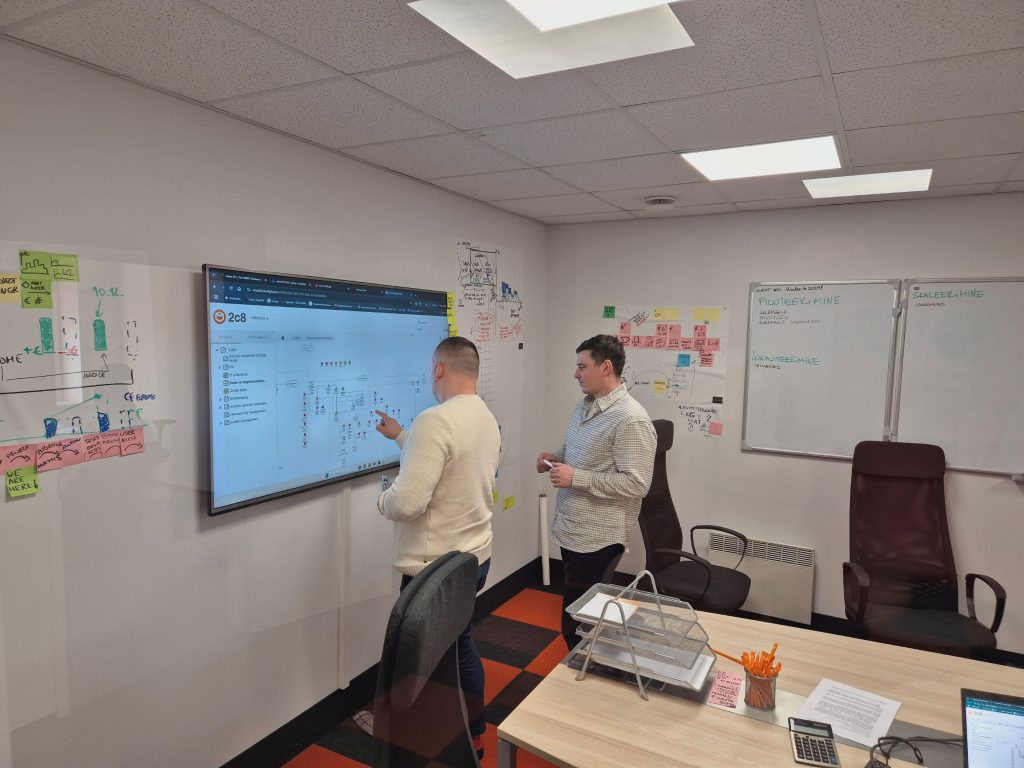
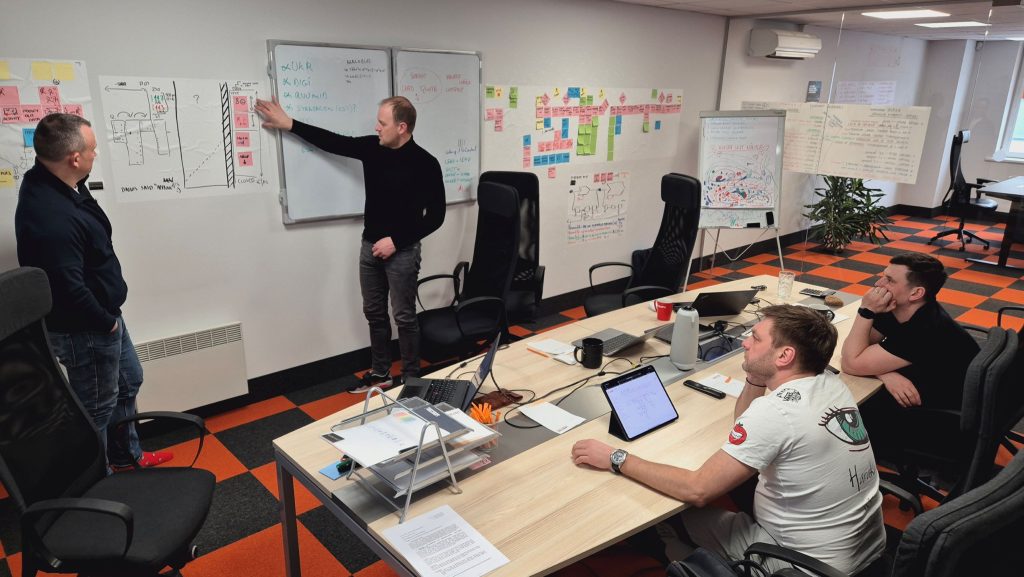
- Mapped and standardised core business processes
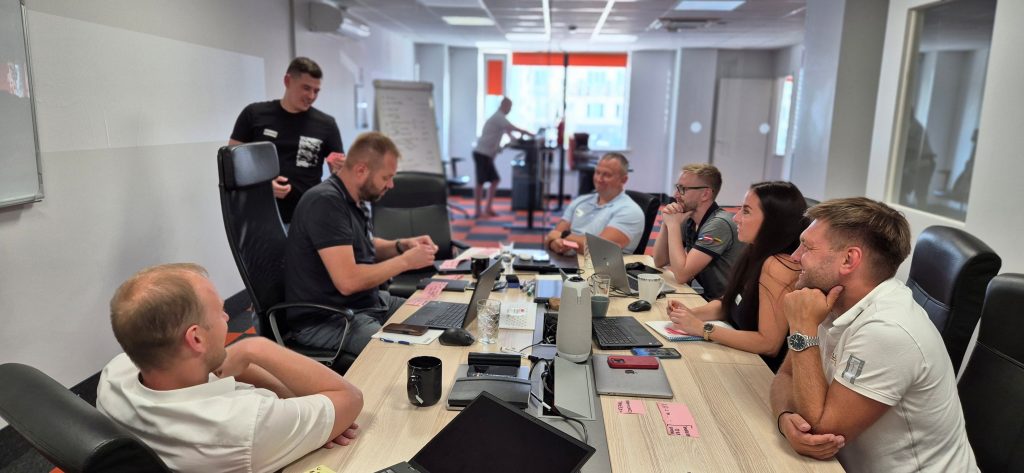
- Documented every core process step by step, starting with project management from lead to cash
- Observed what the team's best-performing people were actually doing day to day, rather than designing an idealised process from scratch
- For each process step, applied a RACI framework - defining who was Responsible for doing the work, who was Accountable for the outcome, who needed to be Consulted before a decision, and who simply needed to be kept Informed
- Standardised the most inconsistent process: sales
- Aligned the sales process end-to-end across all three countries, replacing three local approaches with one
- Piloted every change in a single market first
- Used Latvia as a controlled test market
- Ran weekly review cycles with Lean Digital, fixing real errors before extending the process to other Baltic markets
- Rolled out gradually, with continuous support
- Core implementation ran from roughly May to November 2024, with a structured rollout beginning that September
- Continuous support through year-end helped prevent old habits from creeping back in
Key Outcomes
1. One Unified System Across Three Countries
Uretek Baltic consolidated its scattered spreadsheets, underused business management software, and other disconnected tools into one fully utilised system for CRM, invoicing, and project management.
- Teams in all three countries now work from consistent data and shared terminology.
- The business operates as one system, not three parallel ones.
2. Reliable Revenue, Profit, and Workload Forecasting
Uretek Baltic can now forecast revenue, profit, and workload with confidence and knows its actual sales conversion rate for the first time.
- Revenue, profit, and workload can be forecasted for the first time with confidence.
- The team knows its actual sales conversion rate.
3. Automatic Visibility into Operational Issues
Problems now surface automatically instead of hiding in spreadsheets.
- The team's operational dashboard flagged 106 projects with data or process errors in a single week - from missed deadlines to unsent invoices.
- Project managers start each day with a clear list of what needs attention, rather than a blind spot.
4.A Foundation for Stability
The next phase isn't more change - it's discipline.
- Uretek Baltic has committed to no further major process changes for a year.
- Focus is shifting to deepening how the data they now have feeds into forecasting.
What This Means for Other Multi-Country Operational Businesses
Uretek Baltic's experience shows that:
- Operating across multiple countries doesn't have to mean operating with multiple, incompatible processes.
- The right starting point for digital transformation is process clarity, not new software.
- Piloting changes in one market first makes it possible to catch and fix real errors before they scale across the whole business.
If your company is juggling different local habits across markets, or has tried new software that didn't fix how work actually gets done, the same approach can help: start with the process, not the tool.
Frequently Asked Questions
What industry is Uretek Baltic in?
Uretek Baltic is a geotechnical engineering company, repairing cracked walls, sunken floors, and unstable concrete structures using geopolymer injection, operating across Estonia, Latvia, and Lithuania.
What problem did Uretek Baltic solve with Lean Digital?
Uretek Baltic replaced error-prone spreadsheets and inconsistent, country-by-country habits with standardised, mapped processes, using the Scoro software it already had - now fully utilised - as one unified system across three countries.
How long did the digital transformation take?
The core implementation ran from roughly May to November 2024, with a pilot in Latvia first, followed by rollout across the Baltics and continuous support through year-end. The implementation was preceded by thorough process work - process mapping and standardisation.
What is Lean Digital's approach to process consulting and digital transformation?
Lean Digital starts with process clarity - mapping how a business actually operates - before introducing or reconfiguring software, so that digital tools reinforce a defined process instead of automating existing confusion.
Does Lean Digital replace a company's existing software, or work with what it already has?
Lean Digital typically works with a company's existing tools first, since most operational problems come from undefined processes rather than the software itself. New or reconfigured software is recommended only once the underlying process has been mapped and standardised, and only if it's actually needed.
How does Lean Digital help companies operating in multiple countries standardise their business processes?
Lean Digital maps how each market actually works, defines shared process ownership, and pilots the standardised process in one market before rolling it out to the rest - the approach used across Uretek Baltic's operations in Estonia, Latvia, and Lithuania.
Take the Next Step
Thinking about aligning operations, processes, or digital tools - whether across multiple markets or within a single one?
Contact LEAN DIGITAL to explore how we can help you:
- map and standardise core processes,
- unify fragmented tools and data into one coherent system,
- and build a phased rollout that fits your team's actual resources.